
Dendera and Abydos Tour – Discover the Sacred Heart of Ancient Egypt
When travelers ask, what are the best places to visit in Luxor, most people immediately mention the Valley of the Kings and Karnak. But true explorers know that beyond Luxor’s famous landmarks lies something even more spiritual, more mysterious, and more breathtaking — the sacred temples of Dendera and Abydos.
This extraordinary journey is not just a tour. It is a passage through time. A road trip into the spiritual soul of ancient Egypt.
Imagine leaving Luxor early in the morning. The Nile glows under the sunrise. The desert stretches endlessly around you. The air is calm. The anticipation builds.
Today, you will witness some of the best pharaonic attractions in Egypt, far from the crowds, where history feels untouched.
The Journey from Luxor
The tour to Dendera and Abydos usually begins from Luxor by private air-conditioned vehicle. The drive to Dendera takes approximately 1.5 hours north along the Nile Valley. The scenery is authentic rural Egypt — palm trees, sugarcane fields, small villages, farmers working the land exactly as their ancestors did thousands of years ago.
This drive already answers part of the question: what are the best places to visit in Luxor? Because Luxor is not only monuments — it is atmosphere, landscape, culture, and timeless beauty.
After Dendera, you continue approximately 2.5 hours further north to Abydos. The road becomes quieter, more desert-like. You feel you are entering sacred territory.
The Temple of Dendera – The Temple of Hathor
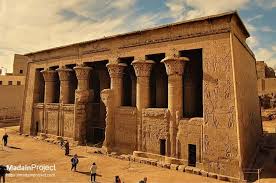
Dendera is one of the best-preserved temples in Egypt. It is dedicated to Hathor, goddess of love, music, healing, and motherhood.
As you approach the massive stone entrance, your breath stops.
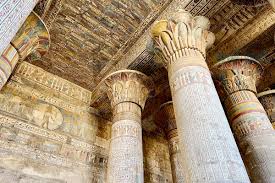
Gigantic columns rise before you, each topped with the face of Hathor. The carvings are unbelievably sharp, as if carved yesterday. The ceiling still holds traces of original colors — deep blues, reds, golds.
Walking inside, you feel protected by history.
This temple is not ruined. It is complete.
Many visitors say that among the best pharaonic attractions in Egypt, Dendera offers the most intact spiritual atmosphere. You can climb to the rooftop. You can see the famous Dendera Zodiac (original in museum, replica on ceiling). You can enter crypts beneath the temple — narrow stone corridors filled with mysterious reliefs.
Standing inside Dendera, you begin to understand ancient Egyptian spirituality.
It was not just architecture.
It was energy.
It was cosmic alignment.
It was healing.
And that connects deeply with modern travelers searching for something meaningful beyond sightseeing.
The Experience
Your guide explains hieroglyphs in detail:
- The rituals of Hathor
- The astronomical ceiling
- The sacred birth house
- The Roman additions by Emperor Tiberius
You do not just look.
You understand.
And when people ask later what are the best places to visit in Luxor, you will confidently answer: Dendera is essential.
Why Combine Dendera with Abydos?
Because Abydos is even more powerful.
If Dendera represents beauty and harmony,
Abydos represents eternity.
Abydos was the most sacred burial site in ancient Egypt before the Valley of the Kings existed.
Yes — even before the Karnak Temple and Valley of Kings became the center of royal glory, Abydos was already holy ground.


Abydos Temple of Seti I – The Sacred Gateway to Eternity
As the road stretches further north from Dendera, the landscape becomes quieter, more mystical. The fertile green fields slowly give way to wide desert horizons. The silence feels ancient. This is not just another stop on your itinerary. This is Abydos — one of the most sacred spiritual centers in all of ancient Egypt.
When travelers ask, what are the best places to visit in Luxor, very few realize that the true spiritual heart of ancient Egypt lies just beyond the typical tourist routes. Abydos is not crowded. It is not commercial. It is raw, authentic, and overwhelmingly powerful. And that is exactly why it is considered one of the best pharaonic attractions in Egypt for those who seek something deeper than photographs.
Arrival at Abydos – First Impression
the massive guideline of the pyramids and light show and sphinx airport:
https://momotoursegypt.com/wp-admin/post.php?post=3962&action=edit
As your vehicle approaches the Temple of Seti I, the desert air feels different. There is a silence here that feels sacred. The temple rises from the sand like a stone manuscript written by the gods.
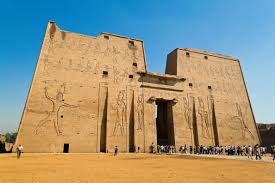
Unlike many Egyptian temples built in standard rectangular layouts, Abydos has a unique architectural design. Its shape is unusual — almost like an elongated L-shape — because it was designed as a temple of memory, resurrection, and divine kingship.
Before entering, your guide explains something crucial:
Abydos was believed to be the burial place of Osiris, the god of the afterlife. Every Egyptian, from the poorest farmer to the most powerful king, dreamed of being connected to Abydos. It was the ultimate spiritual destination.
Suddenly, you understand that this journey is not just historical — it is symbolic.
Entering the Temple of Seti I
The first courtyard leads you toward a hypostyle hall supported by massive columns. The carvings here are unlike any others in Egypt. The reliefs are deep, sharp, and astonishingly detailed.
Seti I, father of Ramses II, built this temple not only to honor the gods but to establish divine legitimacy for his dynasty.
The walls show:
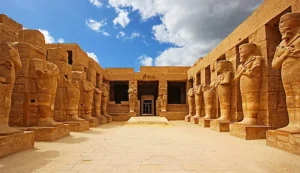

- Seti I offering to Osiris
- Ritual purification ceremonies
- Scenes of divine coronation
- Cosmic symbolism linking heaven and earth
The artistry is so refined that many Egyptologists consider Abydos to contain the finest relief carvings in all of Egypt. This is why it stands proudly among the best pharaonic attractions in Egypt.
The colors, though faded, still whisper ancient brilliance. Deep blues and reds remain visible in protected sections. You can almost imagine the temple fully painted, glowing under torchlight thousands of years ago.
The Famous Abydos King List
One of the most historically important features inside the temple is the King List of Abydos.
Here, carved into the wall, Seti I listed 76 kings of Egypt in chronological order, beginning with Menes (Narmer), the unifier of Upper and Lower Egypt.
Standing before this wall is overwhelming.
You are not looking at myth.
You are looking at recorded royal history.
This list is one of the primary sources historians use to understand ancient Egyptian chronology. It confirms dynasties, validates rulers, and connects timelines.
When visitors later reflect on what are the best places to visit in Luxor, many realize that seeing Abydos gives context to everything else — including the Karnak Temple and Valley of Kings. Because here, you see the lineage of rulers who later built those monumental sites.
The Osirion – The Mysterious Structure
Behind the Temple of Seti I lies one of the most enigmatic constructions in Egypt: the Osirion.
Unlike the decorated temple in front, the Osirion is built with massive granite blocks in a style that appears far older than Seti I’s time. It sits at a lower ground level and is partially submerged in groundwater.
Many scholars debate its origin. Was it symbolic? Was it older than the temple itself? Was it intentionally built to resemble primordial creation waters?
Walking down toward the Osirion feels like descending into another dimension.
Massive stone pillars rise from water below. The atmosphere is quiet, almost mystical. This structure does not feel decorative. It feels elemental.
Here, mythology meets engineering.
Here, you feel ancient Egyptian cosmology in physical form.
Spiritual Importance of Abydos
Abydos was more than a temple complex. It was the pilgrimage site of ancient Egypt.
Every year, Egyptians would travel here to participate in the “Mysteries of Osiris,” a dramatic reenactment of the god’s death and resurrection.
The symbolism was clear:
Death is not the end.
Life continues.
The soul transforms.
This belief shaped everything in ancient Egyptian culture — from tomb design to mummification practices to monumental constructions like the Karnak Temple and Valley of Kings.
Understanding Abydos means understanding the Egyptian obsession with eternity.
The Emotional Experience for Modern Travelers
Imagine standing alone in a hall where priests once chanted hymns to Osiris.
Imagine sunlight filtering through broken stone openings.
Imagine touching walls carved over 3,000 years ago.
This is not a rushed tourist stop.
This is an emotional encounter.
Many travelers say Abydos is the highlight of their Egyptian journey — even more than famous sites — because it feels authentic and untouched.
When someone later asks you, what are the best places to visit in Luxor, you will smile and say: “Go beyond Luxor. Go to Abydos.”
Architectural Details and Symbolism
The temple contains seven sanctuaries dedicated to:
- Osiris
- Isis
- Horus
- Amun
- Ra-Horakhty
- Ptah
- Seti I himself
Each sanctuary is aligned and constructed with symbolic precision. The ceilings display astronomical scenes. The reliefs show ritual offerings with astonishing clarity.
The craftsmanship represents a peak moment in New Kingdom temple art.
Comparing it to other temples, you begin to understand why experts rank it among the best pharaonic attractions in Egypt.
The balance between artistic perfection and spiritual depth is unmatched.
Integration with Luxor’s Main Attractions
A tour to Dendera and Abydos perfectly complements your visit to Luxor’s West and East Banks.
After exploring:
- The grandeur of the Karnak Temple and Valley of Kings
- The tombs of pharaohs hidden inside desert cliffs
- The towering columns of Luxor Temple
You travel north and discover the roots of royal ideology.
It is like reading the introduction to a book after finishing the final chapter.
Abydos explains why Egypt built monumental tombs.
It explains divine kingship.
It explains eternity.
The Scenic Drive Back
As the day ends, you return toward Luxor.
The desert glows orange under sunset light.
Villages pass quietly.
The Nile reflects the sky.
You sit silently, processing what you have seen.
This is more than sightseeing.
This is connection.
And slowly, the answer becomes clear:
When asking what are the best places to visit in Luxor, the answer must include Dendera and Abydos.
Because to truly understand Luxor, you must understand what came before it.
Why This Tour is Essential
Many tourists visit only the famous sites. But those who choose the Dendera and Abydos tour gain something deeper:
✔ Fewer crowds
✔ Exceptional preservation
✔ Spiritual atmosphere
✔ Historical clarity
✔ Emotional depth
It stands proudly among the best pharaonic attractions in Egypt, not because it is famous, but because it is profound.
And when combined with visits to the Karnak Temple and Valley of Kings, your Egyptian experience becomes complete.
In Stage 3, we will:
- Dive deeply into the Karnak Temple complex
- Explore the Valley of the Kings in immersive detail
- Explain how these sites connect spiritually and politically to Dendera and Abydos
- Continue strong SEO keyword integration
The Karnak Temple and Valley of Kings – The Eternal Majesty of Thebes
If Dendera is the temple of beauty and Abydos is the temple of eternity, then Luxor — ancient Thebes — is the temple of power.
When travelers begin researching what are the best places to visit in Luxor, they quickly discover that the city is not just a destination. It is an open-air museum. It is the world’s greatest concentration of ancient monuments. It is the living heartbeat of the best pharaonic attractions in Egypt.
And at the center of this greatness stand two legendary icons: the Karnak Temple and Valley of Kings.
To understand Egypt fully, you must walk through Karnak’s towering columns and descend into the hidden royal tombs carved into desert mountains. Only then does the journey to Dendera and Abydos make complete historical and spiritual sense.
The Karnak Temple – Where Gods and Kings Met
Your morning begins on the East Bank of the Nile. The sun rises behind colossal stone pylons. The air is fresh, golden, timeless.
You approach the Karnak Temple and Valley of Kings area starting with Karnak — the largest religious complex ever built in human history.
This is not a single temple.
It is a city of temples.
A sacred universe of stone.
Construction here lasted more than 2,000 years. Nearly every great pharaoh contributed something. When asking what are the best places to visit in Luxor, Karnak is always the first answer — and for good reason.
The Great Hypostyle Hall
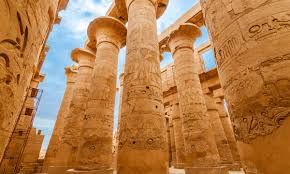
You enter through the massive pylons and suddenly find yourself standing inside the Great Hypostyle Hall.
134 gigantic columns surround you.
Some rise over 20 meters high.
Each carved with hieroglyphs.
Each once painted in vivid colors.
Looking up, you feel small — intentionally so.
Karnak was designed to overwhelm, to demonstrate divine authority, to prove that the pharaoh ruled with the blessing of Amun-Ra, the king of gods.
Light filters between columns.
Birds echo overhead.
The scale is beyond imagination.
This hall alone places Karnak among the best pharaonic attractions in Egypt.
Sacred Lake and Ritual Purification
Walking deeper into the complex, you reach the Sacred Lake. Priests once purified themselves here before rituals. The water reflects the sky just as it did 3,000 years ago.
You learn how religion shaped politics.
How Amun’s priesthood became incredibly powerful.
How Thebes rose to become the capital of the New Kingdom.
Without understanding Karnak, you cannot understand Egypt’s golden age.
And when tourists later reflect on what are the best places to visit in Luxor, Karnak stands not only as architecture — but as ideology carved in stone.
Obelisks and Female Power
Near the heart of the temple stands the towering obelisk of Hatshepsut.
She was one of Egypt’s most powerful female pharaohs. Her obelisk still pierces the sky, a symbol of ambition and divine legitimacy.
The stories here are layered:
- Political struggles
- Religious reforms
- Military victories
- Monumental propaganda
Karnak was not passive.
It was political theater.
And yet, even with its power, it was spiritually connected to the beliefs you witnessed in Abydos and Dendera.
Crossing to the West Bank – Journey to the Afterlife
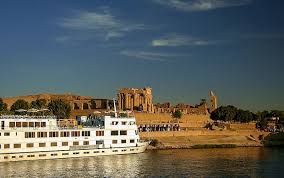




what are the best places to visit in luxorAfter exploring Karnak, you cross the Nile to the West Bank.
The ancient Egyptians believed the west was the land of the dead — where the sun sets and journeys into the underworld.
Ahead of you rise the cliffs of the Theban Mountains.
Hidden inside them lies one of humanity’s greatest archaeological treasures:
The Karnak Temple and Valley of Kings connection reaches its climax here.
The Valley of the Kings – Secrets Beneath the Desert
When people ask what are the best places to visit in Luxor, the Valley of the Kings is always mentioned — and rightly so.
But seeing it in person is different.
The landscape is dramatic.
Sharp limestone peaks.
Golden desert silence.
A dry heat that feels eternal.
There are no pyramids here.
Instead, the tombs are hidden underground — carved deep into rock to protect them from looters.
More than 60 tombs have been discovered.
Each one unique.
Each one telling a story.
This valley is undeniably one of the best pharaonic attractions in Egypt.
Descending into a Royal Tomb
You enter one of the open tombs.
A sloping corridor leads downward.
The walls are fully decorated.
Scenes from the Book of the Dead.
Images of Ra’s journey through the underworld.
Stars painted on ceilings.
The colors remain vivid:
Blues.
Yellows.
Reds.
It feels unreal.
This was not meant for tourists.
It was meant for eternity.
The craftsmanship reveals Egypt’s obsession with life after death — the same belief rooted in Abydos.
The Tomb of Tutankhamun
Perhaps the most famous tomb is that of Tutankhamun.
Though smaller than others, it changed history.
In 1922, Howard Carter discovered it nearly intact. Gold, treasures, chariots, jewelry — the world was stunned.
Standing inside, you realize something powerful:
This young king ruled briefly.
Yet his tomb reshaped modern understanding of ancient Egypt.
When discussing what are the best places to visit in Luxor, no experience compares to standing where pharaohs prepared for eternity.
Ramses II and the Power of Legacy
Other tombs — such as Ramses III, Ramses VI, Seti I — show increasingly complex decoration.
Long corridors.
Multiple chambers.
Astronomical ceilings.
Each tomb represents theological evolution.
The journey through the underworld becomes more detailed.
More artistic.
More complex.
This valley is not just burial ground.
It is theology illustrated in stone.
And without visiting it, you cannot fully appreciate the best pharaonic attractions in Egypt.
The Spiritual Connection Between Sites
Now everything connects.
Abydos introduced you to Osiris — god of resurrection.
Dendera showed you divine harmony.
Karnak demonstrated divine authority.
The Valley of the Kings reveals the final destination of kingship.
The journey forms a complete narrative.
That is why a tour combining Dendera, Abydos, and Luxor’s main sites answers perfectly the question:
what are the best places to visit in Luxor?
Because Luxor is not one monument.
It is a system.
A spiritual ecosystem.
And at its center stand the Karnak Temple and Valley of Kings, anchoring Egypt’s golden age.
Sunset Over the Theban Mountains
As the day ends, the desert glows orange.
The cliffs turn gold.
The air cools.
Silence returns.
You realize something profound:
Egypt is not only history.
It is emotion.
It is standing where priests once chanted.
Where kings walked.
Where eternity was planned.
When tourists visit Egypt casually, they see monuments.
But when they experience Luxor deeply — from Dendera to Abydos to the Karnak Temple and Valley of Kings — they see civilization itself unfolding.
Why Luxor Is the Ultimate Destination
Many countries have ancient ruins.
But nowhere else in the world can you experience such a dense concentration of heritage.
That is why, when asked globally what are the best places to visit in Luxor, travel experts answer:
- Karnak Temple
- Valley of the Kings
- Luxor Temple
- Hatshepsut Temple
- Dendera
- Abydos
Together, they represent the best pharaonic attractions in Egypt.
And the journey is not rushed.
It is immersive.
It is transformational.
Living the Full Luxor Experience – From Sunrise Over the Nile to Sacred Night in Ancient Thebes
By now, your journey has taken you from the mystical temple of Dendera to the sacred spiritual center of Abydos, and deep into the monumental grandeur of the Karnak Temple and Valley of Kings. But Luxor is not only about individual monuments. Luxor is an atmosphere. A rhythm. A living museum where every sunrise and every sunset carries the echo of ancient chants.
When travelers search online asking, what are the best places to visit in Luxor, they often expect a simple list. But Luxor is not a checklist. It is an experience that unfolds from dawn to night, from East Bank to West Bank, from divine temples to royal tombs, from desert silence to illuminated columns glowing in the dark.
And this is why Luxor remains home to some of the best pharaonic attractions in Egypt.
Sunrise Over the Nile – The Awakening of Thebes


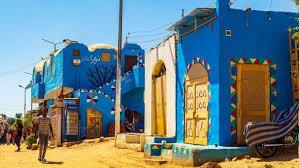
The most magical way to begin a day in Luxor is before the city wakes up. The Nile is calm, reflecting soft pink and golden hues. Feluccas glide silently across the water. Palm trees move gently in the breeze.
Many visitors choose a sunrise hot air balloon ride over the West Bank. As you rise slowly into the sky, Luxor reveals itself like a living map beneath you.
You see:
- The Valley of the Kings hidden within limestone cliffs
- The green agricultural fields along the Nile
- The temples rising from desert sand
- The vast sacred layout of ancient Thebes
From above, you understand something extraordinary: Luxor was not built randomly. It was designed with cosmic precision. East symbolized life. West symbolized death. The Nile represented eternity.
This harmony is why experts consistently rank Luxor among the best pharaonic attractions in Egypt and why the question what are the best places to visit in Luxor can never be answered with just one monument.
Temple of Hatshepsut – The Queen Who Became Pharaoh
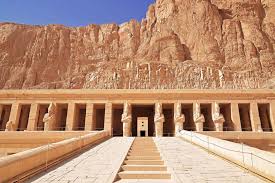
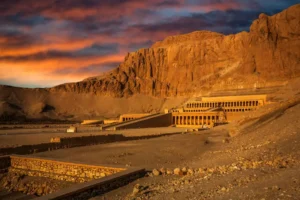
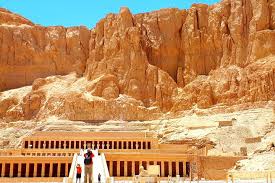
After sunrise, you descend into one of the most elegant architectural masterpieces in Egypt: the Mortuary Temple of Hatshepsut at Deir el-Bahari.
Unlike the Valley of the Kings, where tombs are hidden underground, this temple rises in terraces against dramatic cliffs.
Its symmetry is breathtaking.
Its colonnades stretch in perfect lines.
Its design feels modern — even futuristic.
Hatshepsut, one of the most powerful female rulers in ancient history, built this temple to legitimize her rule as pharaoh.
Inside, reliefs depict:
- Her divine birth
- Trading expeditions to the Land of Punt
- Ritual offerings to Amun
Standing here, you feel the strength of leadership and the ambition of a woman who reshaped Egyptian history.
This site perfectly complements the Karnak Temple and Valley of Kings, because Hatshepsut also left her mark at Karnak with towering obelisks that still stand proudly.
When discussing what are the best places to visit in Luxor, Hatshepsut’s temple is always part of the answer.
Colossi of Memnon – Silent Guardians of Time
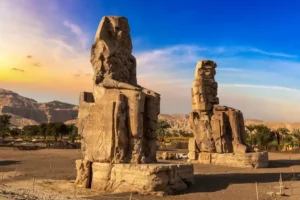
Before leaving the West Bank, you stop at the Colossi of Memnon.
Two massive seated statues rise from open fields, once guarding the entrance to Amenhotep III’s mortuary temple.
Though much of the temple is gone, the statues remain.
They have witnessed:
- Earthquakes
- Floods
- Empires rising and falling
- Thousands of years of sunrise and sunset
These silent giants remind visitors that even ruins carry power. They are a symbol of endurance — just like Egypt itself.
Again, this reinforces why Luxor contains the best pharaonic attractions in Egypt.
Luxor Temple – The Temple of Night
If Karnak is grand and expansive, Luxor Temple is intimate and powerful.
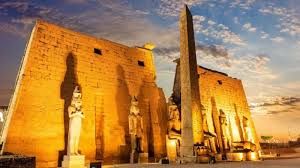
As the sun sets, you approach Luxor Temple in the heart of the city. Unlike most temples, this one glows magnificently at night.
Golden lighting illuminates columns.
Shadows create depth.
The obelisk stands tall in front, its twin now in Paris.
Walking through Luxor Temple after dark feels almost cinematic.
You see:
- The Avenue of Sphinxes connecting it to Karnak
- Ramses II statues towering above you
- Roman frescoes inside ancient walls
- Layers of history from Pharaonic to Roman to Islamic eras
This temple was not dedicated to a god alone. It was a temple of kingship — the place where pharaohs were crowned.
When combining the Karnak Temple and Valley of Kings with Luxor Temple at night, the narrative becomes complete:
Karnak = divine authority.
Valley of Kings = eternal journey.
Luxor Temple = royal legitimacy.
And suddenly the question what are the best places to visit in Luxor feels too small to contain such magnificence.
Walking Through Modern Luxor
Between monuments, you explore the living city.
Markets filled with spices.
Handmade alabaster workshops.
Papyrus art studios.
Friendly locals offering tea.
You realize Luxor is not frozen in time. It breathes. It lives. It evolves.
This combination of ancient and modern creates a unique travel experience that strengthens its position among the best pharaonic attractions in Egypt.
The Avenue of Sphinxes – Reconnecting the Sacred Axis
Recently restored, the Avenue of Sphinxes stretches nearly 3 kilometers, connecting Karnak to Luxor Temple.
Walking this path feels symbolic.
You imagine ancient processions.
Priests carrying sacred boats.
Musicians playing ceremonial instruments.
Crowds celebrating the Opet Festival.
This avenue physically connects the Karnak Temple and Valley of Kings narrative with Luxor Temple’s ritual function.
It is not just a road.
It is a ceremonial artery of ancient Thebes.
The Emotional Impact of Luxor
By now, you have:
- Explored Dendera’s celestial ceilings
- Felt the sacred silence of Abydos
- Walked beneath Karnak’s colossal columns
- Descended into royal tombs
- Watched sunset over the Nile
- Stood inside Luxor Temple at night
And you begin to understand something powerful:
Luxor is not a city you visit.
It is a city you feel.
It changes you.
When someone later asks, what are the best places to visit in Luxor, you will not answer quickly. Because each site tells a chapter of one great story.
And together, they represent undeniably the best pharaonic attractions in Egypt.
The Complete Luxor Experience

A perfect itinerary includes:
Day 1: Karnak Temple and Luxor Temple
Day 2: Valley of the Kings, Hatshepsut Temple, Colossi of Memnon
Day 3: Dendera and Abydos
Each day builds upon the previous one.
Each monument connects to the next.
Each experience deepens understanding.
This integration between sites is what transforms a normal trip into a profound journey.
Why Tourists Must See Luxor Fully
Some travelers rush through Egypt in a few days.
They see pyramids.
They take photos.
They leave.
But those who dedicate time to Luxor discover something different.
They discover:
- Theology carved in stone
- Politics shaped by divine belief
- Art refined to perfection
- Architecture aligned with cosmic order
That is why Luxor answers every version of the question what are the best places to visit in Luxor.
Because the answer is simple:
All of it.
From Dendera to Abydos.
From Karnak to the Valley of Kings.
From sunrise balloon rides to temple nights.
Luxor is the crown jewel of the best pharaonic attractions in Egypt.
You have now journeyed through Dendera’s celestial beauty, Abydos’ sacred mystery, the grandeur of the Karnak Temple and Valley of Kings, the elegance of Hatshepsut’s temple, and the magic of Luxor at night
https://momotoursegypt.com/trip/aswan-abu-simbel-full-day-tour/what are the best places to visit in luxor
Website: momotoursegypt.com https://momotoursegypt.com/trip/the-pyramids-the-sphinx-the-egyptian-museum-felucca-ride-on-the-nile/
📲 WhatsApp: +201023675232
-
WorldHeritageSite.org – Pyramids (Memphis): https://www.worldheritagesite.org/list/pyramids‑memphis/ World Heritage Site
-
UNESCO – Ancient Thebeshttps://momotoursegypt.com/trip/west-bank-luxor-tour-valley-of-the-kings-valley-of-the-queens-hatshepsut-temple-ramesseum-colossi-of-memnon-optional-hot-air-balloon-ride/ with its Necropolis (Luxor / Thebes): https://whc.unesco.org/en/list/87/ UNESCO World Heritage Centre
-
Egyptian Ministry of Tourism & Antiquities – Ancient Thebes: https://egymonuments.gov.eg/world-heritage/ancient-thebes-and-its-necropolis/ EgyMonuments