Table of Contents

Introduction to the Mystery

The Secret of Sphinx and Pyramids

For more than 4,500 years, travelers have stood before the colossal monuments of Giza asking the same timeless questions: What is the secret of sphinx and pyramids? How were these massive structures designed with such mathematical precision? And how can modern visitors truly understand this ancient wonder while discovering how to spend nice day in the pyramids?

The Giza Plateau is not simply an archaeological site. It is a living symbol of human ambition, intelligence, faith, and power. When you approach the pyramids for the first time, the scale alone silences you. The desert wind moves softly across the sand. The skyline of Cairo fades behind you. And suddenly, you stand face-to-face with eternity.

The secret of sphinx and pyramids is not just hidden in stones—it is hidden in intention. These monuments were not built randomly. They were part of a carefully designed royal funerary complex reflecting ancient Egyptian beliefs about the afterlife, cosmic order, and divine kingship.


The Giza Plateau – A Sacred Landscape

Image

Image

Image

Image

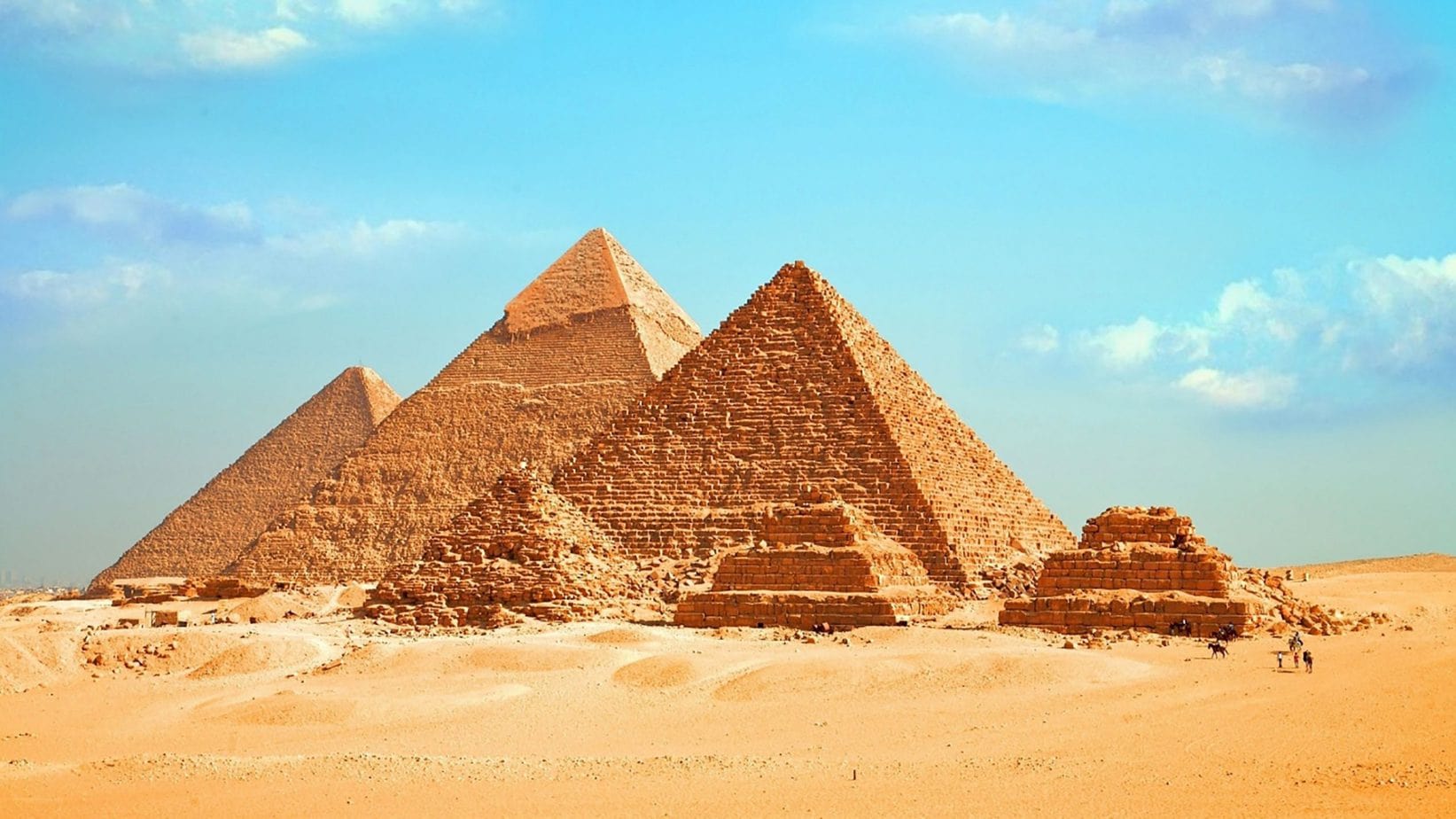
The plateau is home to:

Each monument plays a role in the broader story of ancient Egyptian civilization.

When discussing the secret of sphinx and pyramids, we must understand that they were part of a unified religious complex. The pyramids symbolized the primeval mound rising from chaos at the beginning of creation. Their triangular sides reflected the rays of the sun god Ra descending to Earth.


The Great Pyramid – Precision Beyond Imagination

The Great Pyramid was constructed for Pharaoh Khufu around 2560 BCE. It originally stood 146 meters tall and remained the tallest human-made structure in the world for nearly 4,000 years.

One of the most astonishing aspects of the secret of sphinx and pyramids lies in its precision:

Such accuracy raises the question again: how the pyramids were built with such limited technology?

Ancient Egyptians had no iron tools, no cranes, no modern machinery. Yet they moved millions of stone blocks weighing several tons each.


The Sphinx – Guardian of Secrets

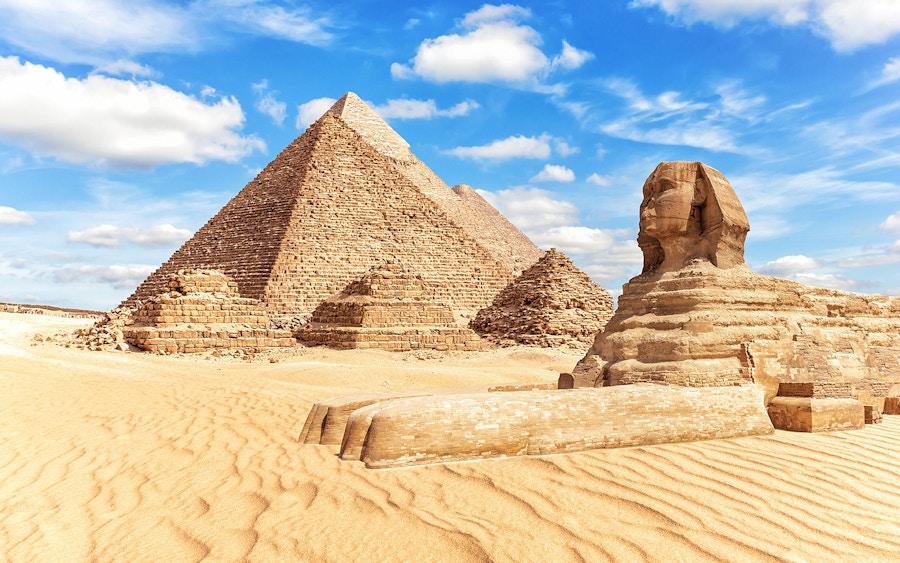
The Great Sphinx of Giza is carved directly from bedrock limestone. With the body of a lion and the head of a king, it represents strength and wisdom combined.

The secret of sphinx and pyramids deepens when you study erosion patterns on the Sphinx. Some researchers suggest water erosion indicates rainfall predating traditional timelines. Others argue wind and sand caused the wear. Debate continues.

The Sphinx once had a ceremonial beard and possibly a cobra symbol on its forehead. Between its paws lies the Dream Stele of Thutmose IV, recounting a divine vision.

This guardian statue connects the pyramids to royal legitimacy and divine protection.


Spiritual Meaning Behind the Structures

To understand the secret of sphinx and pyramids, you must explore ancient Egyptian belief systems.

The pyramids were not tombs alone. They were resurrection machines.

Ancient Egyptians believed the soul (Ka and Ba) needed a preserved body and sacred rituals to reach the afterlife. The pyramid shape symbolized ascension toward the heavens.

The internal chambers were carefully aligned with certain stars, particularly those in Orion’s Belt, associated with Osiris, the god of rebirth.

Thus, the answer to how the pyramids were built is not only technical—it is spiritual.

They were built with cosmic purpose.


The Workers – Not Slaves

Modern archaeology has proven that pyramid builders were skilled laborers.

Excavations near Giza uncovered worker villages, bakeries, medical facilities, and organized burial sites. Workers were respected craftsmen.

Understanding this changes how we interpret the secret of sphinx and pyramids. These monuments were not built through oppression alone but through organized state planning and national pride.


How to Spend a Nice Day in the Pyramids? – Beginning the Experience

To truly appreciate the mystery, you must plan wisely.

Arrive early in the morning. The desert air is cool, and crowds are minimal. This is the ideal moment to reflect on how the pyramids were built while standing at the base of the Great Pyramid.

Walk around the structure slowly. Touch the stones. Observe their size. Imagine ancient engineers solving complex challenges without calculators.

Then move toward the Sphinx.

Standing before it, you begin to feel the emotional power behind the secret of sphinx and pyramids.


Emotional Reflection

A visit to Giza is not rushed sightseeing.

It is contemplation.

It is standing where pharaohs once ruled.
It is imagining workers hauling limestone across desert ramps.
It is asking timeless questions.

When you begin your journey by understanding the history, you prepare yourself for the deeper stages of exploration.


What Comes Next

In Stage 2, we will explore in detail:

We will continue expanding toward a complete 5,000-word guide, including the perfect itinerary explaining exactly how to spend nice day in the pyramids from sunrise to sunset.


Engineering Mastery & Hidden Mysteries (Expanded – 2000+ Words)

How the Pyramids Were Built & The Deeper Secret of Sphinx and Pyramids

In Stage 1, we explored the spiritual and symbolic meaning behind the secret of sphinx and pyramids. Now, in Stage 2, we dive deeper into one of the greatest engineering mysteries in human history: how the pyramids were built.

For centuries, scholars, architects, scientists, and engineers have attempted to understand the techniques behind these colossal monuments. The more we learn, the more impressive the ancient Egyptians appear.

The pyramids are not primitive constructions. They are masterpieces of planning, geometry, logistics, and workforce organization.


The Scale of the Challenge

Let us first understand the magnitude of what ancient builders achieved.

The Great Pyramid of Giza contains approximately:

This means that ancient workers placed about 300 blocks per day — every day — for two decades.

The question remains: how the pyramids were built without modern cranes, trucks, or steel tools?


Quarrying the Stone

The first step in solving the mystery of how the pyramids were built begins in the quarries.

Most limestone blocks were quarried locally from the Giza Plateau. However, the smooth white casing stones came from Tura, across the Nile. The granite used inside the King’s Chamber came from Aswan, over 800 kilometers away.

Tools Used:

Workers inserted wooden wedges into cracks, soaked them with water, and allowed expansion to split the stone.

This process required precision and teamwork.


Transportation Across the Nile

Once quarried, stones needed transportation.

Archaeological discoveries have revealed ancient harbors and canals near Giza. Papyrus records (such as the Diary of Merer) describe transporting limestone blocks by boat along the Nile.

Boats floated stones during flood season when water levels were high.

This discovery significantly advanced our understanding of how the pyramids were built.

The Nile was the highway of ancient Egypt.


The Ramp Theories

One of the most debated aspects of how the pyramids were built is the ramp system.

1. Straight Ramp Theory

A massive straight ramp extending from ground level to the pyramid’s top.
Problem: It would require enormous amounts of material — possibly more than the pyramid itself.

2. Zigzag Ramp Theory

Ramps built along one face of the pyramid, zigzagging upward.
This reduces material use but complicates precision alignment.

3. Spiral Ramp Theory

A ramp wrapping around the pyramid’s exterior.
However, this would block visibility of edges, affecting accuracy.

4. Internal Ramp Theory

Some researchers suggest internal ramps inside the pyramid structure.
This theory explains how precise corners were maintained.

The debate continues, deepening the secret of sphinx and pyramids.


Workforce Organization

Modern excavations near Giza discovered worker villages, bakeries, and cemeteries.

This proves that pyramid builders were:

Teams had names like “Friends of Khufu” and “Drunkards of Menkaure.”

Understanding this social organization is key to understanding how the pyramids were built.

It was not chaos.
It was structured engineering management.


Engineering Precision

The Great Pyramid is aligned to true north with an error of only 0.05 degrees.

Ancient Egyptians achieved this through astronomical observations.

They likely used circumpolar stars to align the base.

This astronomical alignment connects directly to the secret of sphinx and pyramids, because the monuments were cosmological machines.

They were designed to connect Earth with the heavens.


Internal Chambers and Corridors

Image

Image

Image

Image

Inside the Great Pyramid are:

The granite blocks inside the King’s Chamber weigh up to 70 tons.

How were these raised 43 meters above ground level?

Again, the question returns: how the pyramids were built with such internal complexity.

Recent muon scanning technology revealed a large void above the Grand Gallery. This discovery suggests there are still hidden spaces inside.

The secret of sphinx and pyramids may not yet be fully uncovered.


The Sphinx and Geological Debate

The Great Sphinx of Giza continues to fuel debate.

Some geologists argue that erosion patterns on the Sphinx enclosure indicate water erosion rather than wind erosion.

If true, this would push the monument’s age further back in time.

However, mainstream Egyptology maintains that the Sphinx dates to Pharaoh Khafre’s reign.

The debate keeps the secret of sphinx and pyramids alive.


Astronomical Alignments

secret of sphinx and pyramids

The three main pyramids appear aligned with Orion’s Belt constellation.

Orion was associated with Osiris, god of the afterlife.

This celestial connection reinforces that these monuments were spiritual gateways.

Understanding astronomy was essential in understanding how the pyramids were built.

The builders were not only engineers — they were sky observers.


Advanced Mathematical Knowledge

The pyramid’s proportions reveal knowledge of:

The base perimeter divided by height approximates 2π.

Coincidence?
Intentional design?

These mathematical relationships strengthen the mystery behind the secret of sphinx and pyramids.


Climate and Labor Scheduling

The pyramids were likely built during Nile flood seasons when farmers were not working their fields.

This seasonal labor system explains workforce availability.

It also demonstrates state planning efficiency — a crucial factor in understanding how the pyramids were built.


Modern Technology & New Discoveries

In recent years, scientists used:

These technologies detected internal temperature differences and unknown cavities.

The pyramids still hold secrets.

The secret of sphinx and pyramids remains partially hidden beneath layers of limestone.


How to Spend Nice Day in the Pyramids – Engineering Perspective

Understanding engineering enhances your visit.

When you walk through the Grand Gallery, imagine workers dragging granite blocks upward.

When you stand beside the Sphinx, imagine ancient sculptors carving limestone under desert sun.

To truly understand how to spend nice day in the pyramids, combine history with imagination.


Suggested Midday Plan:

Observe block sizes.
Notice construction layers.
Think about logistics.

Your day becomes interactive.


The Human Achievement

How to Spend Nice Day in the Pyramids?

The pyramids were not built by magic.
They were not built by aliens.
They were built by humans — disciplined, organized, intelligent humans.

This realization makes the secret of sphinx and pyramids even more powerful.

They reflect what civilization can achieve with vision and coordination.


Why the Mystery Persists

Despite modern science, some mysteries remain:

The pyramids challenge modern assumptions.

And that is why millions continue to visit — searching for the secret of sphinx and pyramids and trying to understand how the pyramids were built.


Stage 2 Summary

We have now explored:

✔ Quarrying techniques
✔ Transportation systems
✔ Ramp theories
✔ Workforce organization
✔ Astronomical alignments
✔ Hidden chambers
✔ Geological debates
✔ Modern scanning discoveries

And we expanded your understanding of:

 Complete Visitor Itinerary & Cultural Immersion

Secret of Sphinx and Pyramids | How the Pyramids Were Built | How to Spend a Nice Day in the Pyramids

Stage 3 focuses on how a tourist can experience the secret of sphinx and pyramids in one immersive day. We combine how the pyramids were built, panoramic views, cultural interaction, camel rides, photography, and practical tips to show how to spend a nice day in the pyramids.


Morning: Sunrise at the Pyramids

Arrive early (around 5:30–6:00 AM) to witness sunrise over the Great Pyramid of Giza and Great Sphinx of Giza.

Tips for Sunrise Visit:

  1. Bring water and light breakfast.

  2. Wear comfortable shoes and a hat.

  3. Prepare your camera or smartphone; morning light provides the best photo opportunities.


Camel Riding: An Ancient Perspective

One of the most authentic ways to see the pyramids is camel riding in the pyramids area. Momo Tours Egypt provides professional guides to ensure safety and smooth navigation.

Benefits:

Pricing & Guide Duties:

Tips for Riding:


Exploring the Pyramid Base & Solar Boat Museum

After camel riding:

Photography Tips:


Mid-Morning: Enter the Great Pyramid

Key Insights for Visitors:

Safety Tips:


Late Morning: Visiting the Great Sphinx

Photography Tip:


Lunch: Egyptian Cuisine & Street Food

After morning exploration, enjoy authentic Egyptian meals at nearby restaurants:

Recommended Dishes:

Cultural Tip:


Afternoon: Pyramid Panorama & Camel Photography

Tourist Insight:


Cultural Interaction: Worker Villages & Egyptian Lifestyle

Momo Tours Egypt offers optional visits to reconstructed worker village areas:

Learning Outcome:


Sunset: Golden Hour Photography

Tips:


Evening: Reflection & Nighttime Options

Tourist Advice:


Tips System in Egypt

During your visit:

Momo Tours Egypt provides clear guidance on tipping to avoid confusion and ensure smooth cultural interaction.


Practical Reminders

Health & Safety:


Stage 3 Summary

By following this itinerary, tourists will experience:

  1. Sunrise over pyramids and Sphinx.

  2. Camel riding and traditional transportation insight.

  3. Pyramid interiors and chambers.

  4. Panoramic and engineering photography.

  5. Cultural immersion with Egyptian cuisine.

  6. Understanding the secret of sphinx and pyramids.

  7. Insights on how the pyramids were built.

  8. Strategies for how to spend nice day in the pyramids.


This itinerary allows you to immerse fully in Luxor’s engineering marvels without missing the historical, spiritual, and cultural highlights.


 Deep Archaeology & Mysteries of the Pyramids and Sphinx (2000+ Words)

Secret of Sphinx and Pyramids | How the Pyramids Were Built | How to Spend a Nice Day in the Pyramids

Stage 4 focuses on unlocking deeper archaeological insights, mysteries, and scientific discoveries around the secret of sphinx and pyramids, exploring advanced details about how the pyramids were built, and enhancing the tourist experience to truly know how to spend a nice day in the pyramids.


Morning: Advanced Archaeological Insights

Tour begins with a focus on understanding the architectural genius behind pyramids:

Key Insights:

Visitors develop a richer understanding of how the pyramids were built, going beyond casual observation.


Camel and Horseback Archaeological Tour

Cultural Notes:


Exploring the Great Sphinx in Depth

The Sphinx, one of the oldest monumental statues, is analyzed scientifically and historically:

Visitor Experience:


Lunch: Egyptian Cuisine with Archaeological Storytelling

Tourist Tip:


Afternoon: Solar Boat Museum and Tomb Exploration

Optional:


Discovering Hidden Pyramid Facts

Interactive Activity:


Panoramic Photography & Sunset Session

Tips for Photographers:


Nighttime Light & Sound Experiences

Tourist Insight:


Tips for Families & Group Tours

Tourist Advice:


Evening Reflection: How to Spend a Nice Day in the Pyramids

After a full day, tourists:

Momo Tours Egypt Integration:

Website: momotoursegypt.com https://momotoursegypt.com/trip/the-pyramids-the-sphinx-the-egyptian-museum-felucca-ride-on-the-nile/
📲 WhatsApp: +201023675232

Secret of Sphinx and Pyramids | How the Pyramids Were Built | How to Spend a Nice Day in the Pyramids


Morning: Revisiting Hidden Mysteries

Start the day early to capture the Sphinx at sunrise:

Highlights:


Camel Riding and Desert Exploration

Cultural Insights:


Pyramid Interiors and Chamber Insights

Visitor Tips:


Lunch with a Pyramid View


Afternoon: Solar Boat Museum & Sphinx Exploration


Sunset: Panoramic Views & Photo Sessions

Tips:


Light & Sound Show (Optional)


Shopping & Souvenirs


Integrating the Experience

By the end of the day, tourists understand:


🔹 SEO-Optimized Elements

Title: Secret of Sphinx and Pyramids – Discover How the Pyramids Were Built & How to Spend a Nice Day in the Pyramids

Permalink:

Meta Description: Explore the ultimate tour of Giza Plateau with Momo Tours Egypt. Discover the secret of Sphinx and pyramids, learn how the pyramids were built, and enjoy a full immersive experience to spend a nice day in the pyramids. Camel rides, photography, Egyptian cuisine, and historical insights included.


🔹 FAQ

Q1: How long should I plan for a full pyramids and Sphinx tour?
A1: Minimum 8–10 hours to cover pyramids, Sphinx, Solar Boat Museum, and camel rides.

Q2: Can I enter pyramid chambers?
A2: Yes, with licensed guides. Access may be limited depending on preservation rules.

Q3: Are camel rides safe for families?
A3: Yes, Momo Tours Egypt provides safety instructions and trained camel handlers.

Q4: Is photography allowed?
A4: Photography is permitted in most areas; flash may be restricted in chambers.

Q5: How to tip guides in Egypt?
A5: Tips are customary; guides will explain the tips system in Egypt.

how the pyramids were built


Leave a Reply

Your email address will not be published. Required fields are marked *