Visit to Giza Pyramids and Grand Egyptian Museum: A Complete Guide to Egypt’s Greatest Day Tour
A visit to Giza Pyramids and Grand Egyptian Museum is one of the most powerful cultural experiences you can have in Egypt. In just one day, travelers can witness the architectural genius of the ancient world, explore the newest and most advanced museum ever built for a single civilization, and walk through sites that shaped human history for more than 5,000 years.
This carefully designed tour combines Egypt’s most iconic landmarks—the Giza Pyramids, the Sphinx, the Grand Egyptian Museum, and Memphis—into a smooth, well-paced journey suitable for first-time visitors, history lovers, families, and private travelers.
Understanding what you will see, when to go, and why this tour matters will help you get the most value from your day. This guide explains everything in detail while also answering one of the most common traveler questions: the best season to visit Egypt.
Get ready for an unforgettable day exploring some of Egypt’s most iconic historical landmarks! Your tour begins with pickup from any location of your choice – hotel, airport, or residence – in a comfortable, air-conditioned vehicle with a professional driver.
Tour Highlights
Prices (per person in Euro):
- 1 person: €125
- 2 persons: €109
- 3–4 persons: €89
- 5–11 persons: €78
- 12–18 persons: €60
- 18+ persons: €45
Children under 5: FREE
Optional Add-ons:
- Professional photographer – €100/day
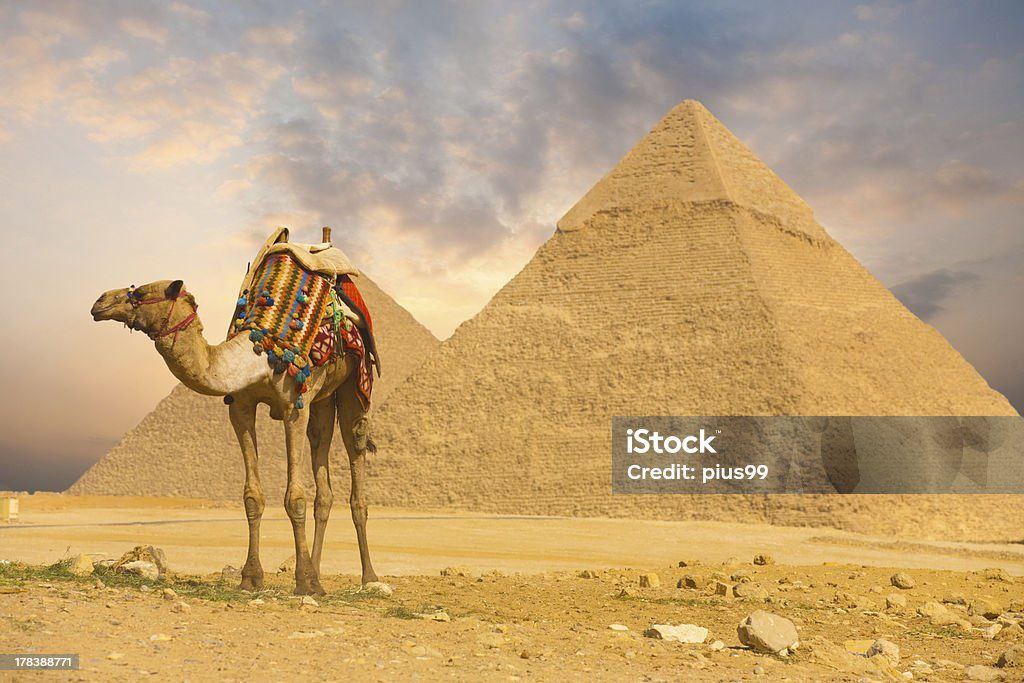
- Camel ride (1 hour) – €20/person
- Beach buggy – €40/person
Tour Highlights:
Giza Pyramids (Great Pyramid – Khafre – Menkaure):
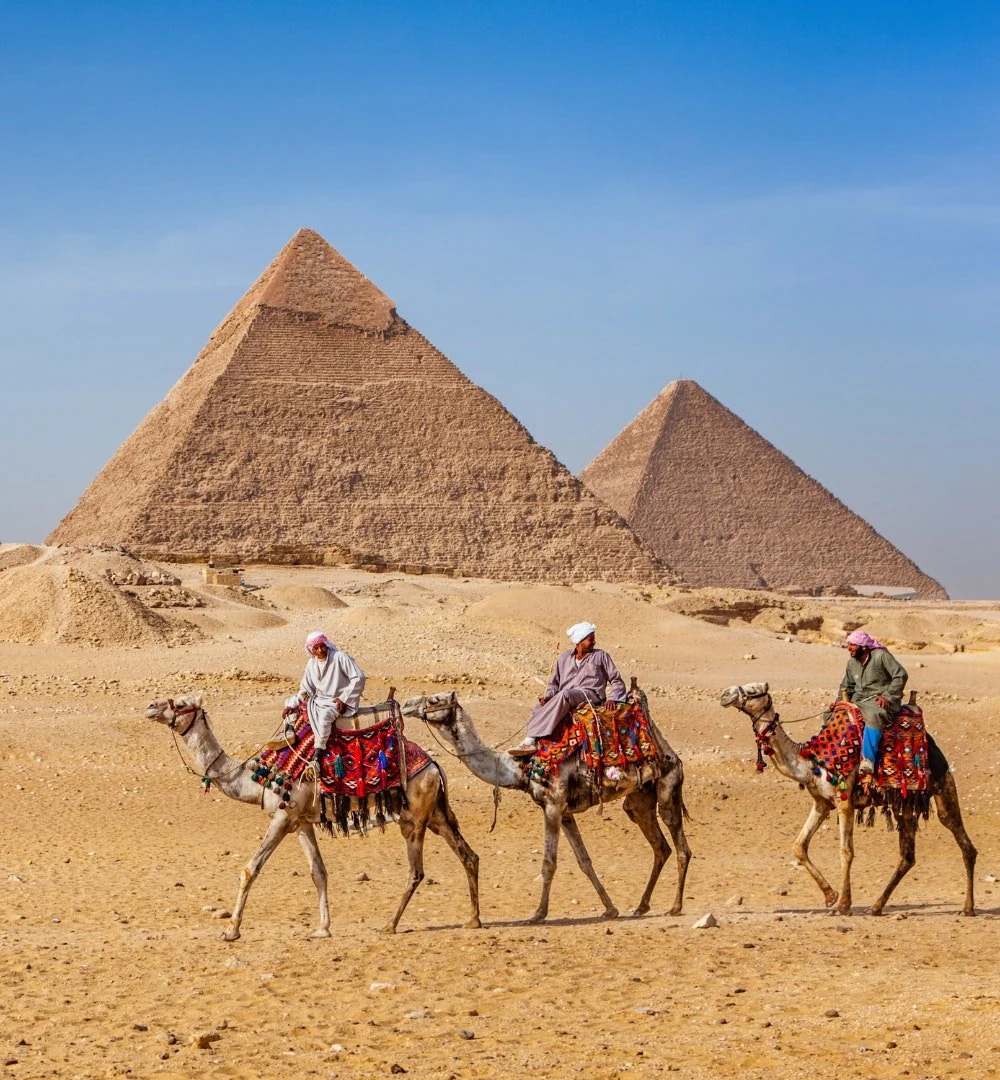
Start your day at one of the last remaining wonders of the ancient world. Stand before the Great Pyramid of Khufu – the largest stone structure ever built – and hear fascinating details about its construction, inner chambers, and surrounding myths. Continue to the Pyramid of Khafre, which still retains parts of its original casing, then to the smaller, but no less impressive, Pyramid of Menkaure.
The Sphinx:
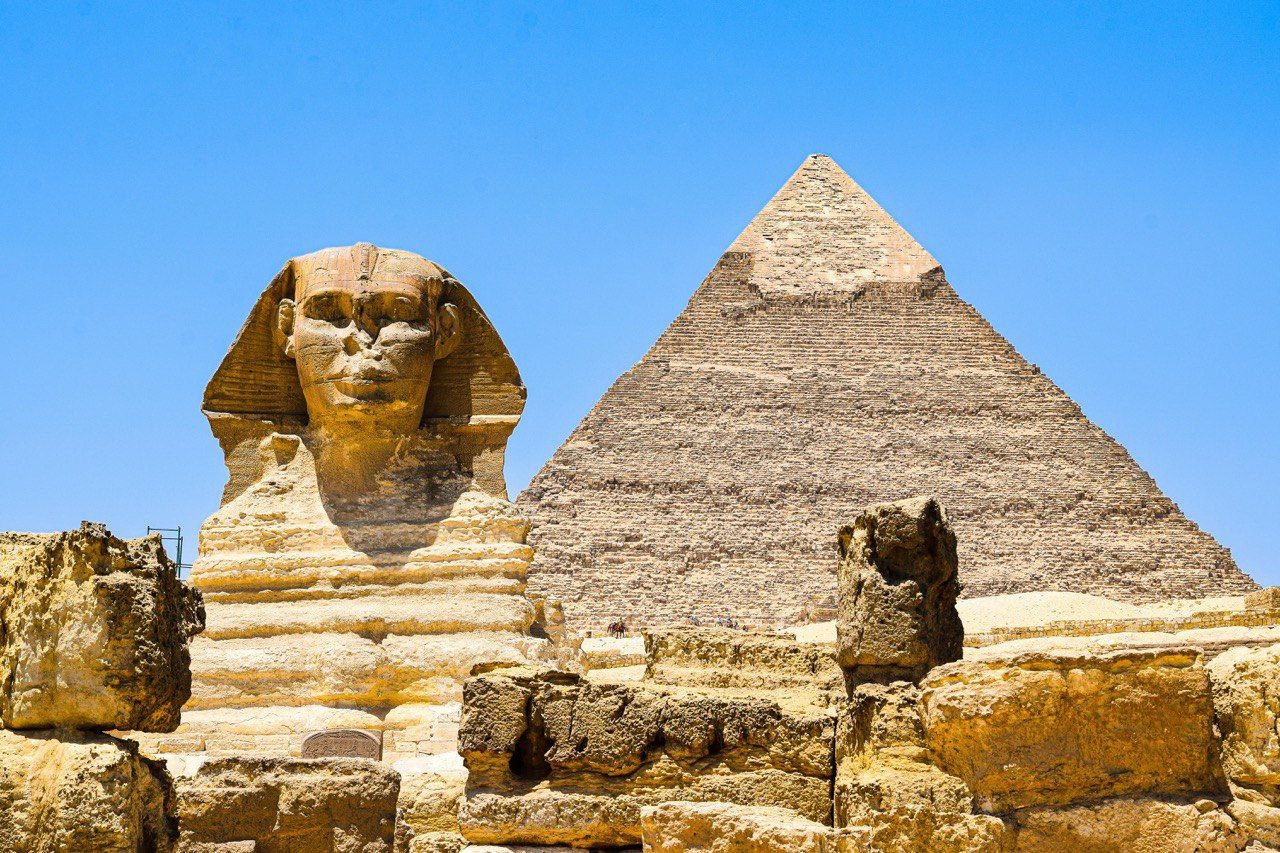
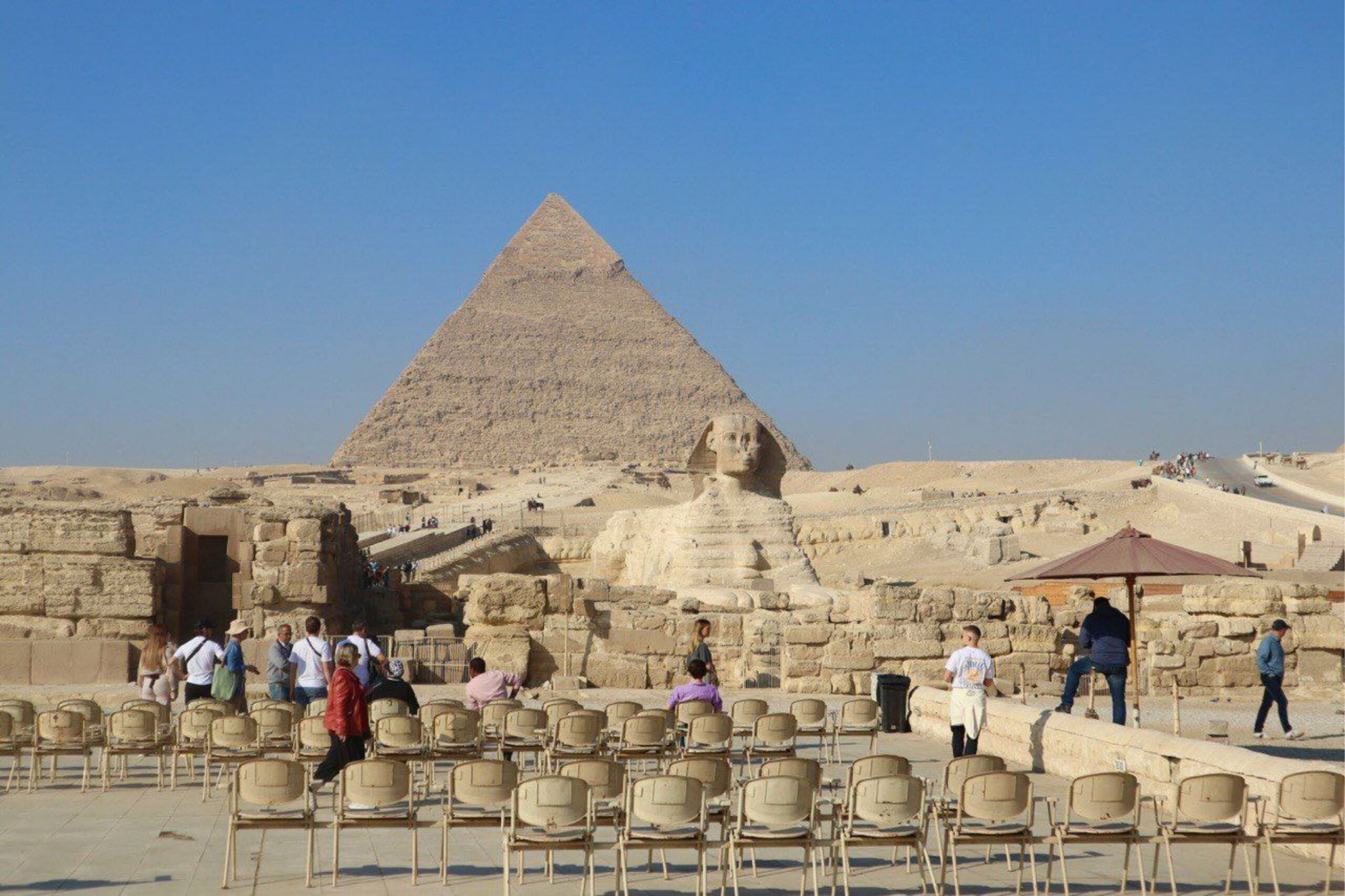
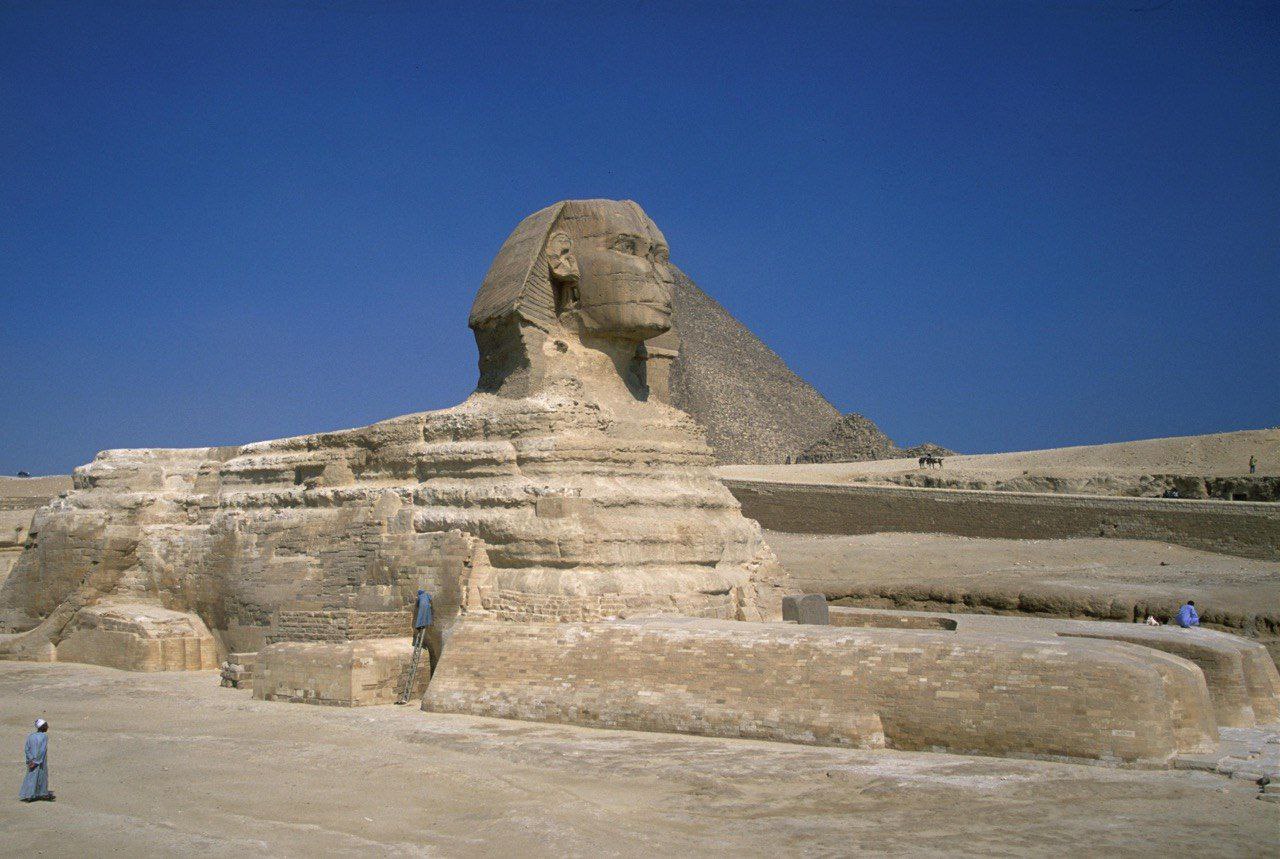
Just a few steps away lies the Great Sphinx – a mythical statue with a lion’s body and a pharaoh’s head. Your guide will explain the legends behind this guardian of the Giza Plateau and share stories of restoration and symbolism.
Grand Egyptian Museum (GEM):
Next, visit the newest and largest archaeological museum in the world, dedicated entirely to ancient Egyptian civilization. See all of King Tutankhamun’s treasures displayed together for the first time, along with more than 100,000 other artifacts, royal mummies, statues, and everyday tools of the pharaohs – all showcased with modern interactive technologies.
Memphis (Mit Rahina):
Conclude the tour at Egypt’s oldest capital – the ancient city of Memphis. Explore the open-air museum, home to the colossal statue of Ramses II, the alabaster Sphinx, war chariots, and the temple of Ptah.
Lunch:
Enjoy a break with a lavish open buffet lunch at a restaurant overlooking the pyramids, offering a taste of traditional Egyptian cuisine in a relaxing atmosphere.
Tour Timing:
8:00 AM – 5:00 PM
Type:
Private / Group (your choice)
Package Includes
- Private air-conditioned transfers
- Professional tour guide
- Open buffet lunch (Egyptian cuisine)
- Pickup from anywhere in Egypt (hotel – airport – residence)
Why a Visit to Giza Pyramids and Grand Egyptian Museum Is Unmissable
Egypt is not just a destination—it is a civilization. A visit to Giza Pyramids and Grand Egyptian Museum allows you to experience both the outdoor monuments and the indoor treasures that define ancient Egypt.
-
The pyramids show how the ancient Egyptians built for eternity
-
The museum explains why they did it
-
Memphis reveals where Egyptian civilization began
This combination creates a complete historical narrative in a single, unforgettable day.
The Giza Pyramids: Standing Before Eternal Monuments
The Great Pyramid of Khufu
Your visit begins at the Giza Plateau, home to the most famous monuments on Earth. The Great Pyramid of Khufu is the largest stone structure ever built by humans and the only surviving Wonder of the Ancient World.
During your visit to Giza Pyramids and Grand Egyptian Museum, you will learn:
-
How over 2.3 million stone blocks were moved and assembled
-
Why the pyramid was aligned with extraordinary astronomical precision
-
What lies inside the pyramid’s chambers and passageways
Seeing the Great Pyramid in person is an emotional experience. No photograph can capture its scale or presence.
The Pyramid of Khafre
Next, you will explore the Pyramid of Khafre, which appears taller due to its elevated position and remaining limestone casing at the top. This pyramid helps explain the evolution of pyramid construction techniques.
Your guide will explain how Khafre’s complex was designed as a complete spiritual journey—from valley temple to pyramid—highlighting the religious beliefs of ancient Egypt.
The Pyramid of Menkaure
Smaller but elegant, the Pyramid of Menkaure represents refinement and balance. It offers insight into changes in royal power, resources, and architectural priorities during the Fourth Dynasty.
Together, these three monuments form the heart of any visit to Giza Pyramids and Grand Egyptian Museum.
The Great Sphinx: Guardian of the Plateau
Just steps away from the pyramids stands the Great Sphinx—one of the most mysterious statues ever created. With the body of a lion and the head of a pharaoh, the Sphinx symbolizes strength, wisdom, and royal authority.
During your tour, you will discover:
-
Who likely commissioned the Sphinx
-
The meaning of its symbolism
-
Restoration efforts across thousands of years
The Sphinx adds myth, legend, and mystery to your visit to Giza Pyramids and Grand Egyptian Museum, making the experience more than just a historical lesson.
The Grand Egyptian Museum: Egypt’s Greatest Cultural Achievement of the Modern Era
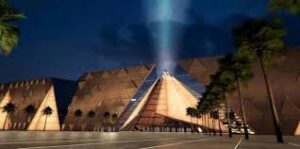
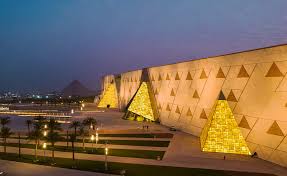
After exploring the ancient outdoor monuments, the tour continues to the Grand Egyptian Museum (GEM)—the largest archaeological museum in the world dedicated to a single civilization.
This museum is revolutionary not only because of its size, but because of how it presents history.
What Makes the Grand Egyptian Museum Unique
-
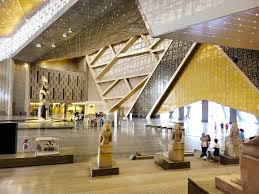
Over 100,000 artifacts displayed using modern technology
-
Immersive galleries with storytelling layouts
-
Conservation labs visible to visitors
-
Monumental statues displayed in natural light
A visit to Giza Pyramids and Grand Egyptian Museum would be incomplete without entering this extraordinary space, where ancient Egypt is brought to life in a way never seen before.
The Golden Mask of Tutankhamun: The Crown Jewel of the Museum
One of the most anticipated highlights of the museum is the golden mask of Tutankhamun. For the first time in history, all of King Tutankhamun’s treasures are displayed together in one place.
The golden mask is:
-
Made of solid gold
-
Inlaid with lapis lazuli, quartz, and obsidian
-
A masterpiece of ancient craftsmanship and symbolism
Seeing the golden mask of Tutankhamun up close allows visitors to understand ancient Egyptian beliefs about death, rebirth, and immortality.
This moment alone makes the visit to Giza Pyramids and Grand Egyptian Museum unforgettable.
Memphis: The First Capital of Ancient Egypt
The tour concludes with a visit to Memphis (Mit Rahina), the first capital of Ancient Egypt, founded over 5,000 years ago by King Narmer (Menes) after the unification of Upper and Lower Egypt. Strategically located at the entrance to the Nile Delta, Memphis served for centuries as the political, administrative, and religious center of the Egyptian state.
Today, Memphis is recognized as a UNESCO World Heritage Site and preserved as an open-air museum, offering visitors a rare opportunity to walk among monumental remains that once defined the heart of ancient civilization.
During your visit, you will discover some of its most important treasures:
-
The colossal statue of Ramses II, an impressive limestone monument that reflects the power and grandeur of one of Egypt’s greatest pharaohs. Despite lying in a horizontal position, its sheer size and craftsmanship leave a lasting impression.
-
The alabaster Sphinx, a beautifully carved sculpture made from a single block of stone, symbolizing royal strength and divine protection. Its smooth finish and serene expression make it one of the highlights of the site.
-
The remains of temples dedicated to the god Ptah, the chief deity of Memphis, revered as the creator god and patron of architects and craftsmen. These temple ruins reveal the city’s deep religious importance and its role as a spiritual center alongside its political power.
Memphis serves as the missing link between the monumental achievements you have seen earlier in the day — the Pyramids of Giza, the Sphinx, and the Grand Egyptian Museum. It brings together royal authority, religious belief, and architectural mastery, helping visitors understand how Ancient Egypt functioned as a unified civilization.
This final stop provides a meaningful sense of historical continuity and closure, allowing you to reflect on the origins of Egyptian power and culture before concluding your journey through one of the world’s greatest ancient civilizations.
https://momotoursegypt.com/wp-admin/edit.php
Best Season to Visit Egypt for This Tour
Choosing the best season to visit Egypt greatly enhances your experience.
Best Months:
-
October to April
Why This Season Is Ideal:
-
Mild temperatures
-
Comfortable sightseeing conditions
-
Clear skies for photography
The best season to visit Egypt allows you to explore the pyramids, museum, and Memphis without extreme heat, making your visit to Giza Pyramids and Grand Egyptian Museum more enjoyable and relaxed.
A Complete 6-Hour Journey: How Your Visit to Giza Pyramids and Grand Egyptian Museum Unfolds
A successful visit to Giza Pyramids and Grand Egyptian Museum depends not only on the sites themselves, but also on how the day is organized. This tour is designed to be smooth, efficient, and enriching, ensuring that travelers experience Egypt’s most important landmarks without feeling rushed or overwhelmed.
From hotel pickup to the final stop in Memphis, every moment of the tour has been carefully planned to balance history, comfort, photography, and rest.
Convenient Pickup and Comfortable Transportation
Your day begins with pickup from any location of your choice—hotel, airport, or private residence. This flexibility is especially valuable for travelers arriving on early flights or staying outside central Cairo.
Why Transportation Matters
Egypt’s historical sites are spread across a wide area, and comfortable transportation is essential for enjoying your day. During your visit to Giza Pyramids and Grand Egyptian Museum, you will travel in:
-
A modern, air-conditioned vehicle
-
A private or group setting (your choice)
-
A clean, well-maintained car driven by a professional driver
This level of comfort is particularly important during warmer months, even during the best season to visit Egypt, when temperatures can still rise by midday.
First Stop: Giza Plateau – Where History Begins
The tour begins at the legendary Giza Plateau, the heart of ancient Egyptian architecture. Starting early in the morning allows visitors to enjoy cooler temperatures and fewer crowds—one of the many advantages of planning your visit to Giza Pyramids and Grand Egyptian Museum during the best season to visit Egypt.
Exploring the Great Pyramid of Khufu in Detail
Your guide will introduce you to the Great Pyramid, explaining:
-
Why it was built as a royal tomb
-
How its internal chambers were designed
-
The religious meaning behind its shape
Visitors often underestimate the emotional impact of standing before this monument. The scale, silence, and age of the pyramid create a moment of reflection unlike anywhere else on Earth.
Exploring the Great Pyramid of Khufu – By the Numbers
1. Basic Facts
-
Built around 2580–2560 BCE
-
Constructed during the reign of Pharaoh Khufu (Cheops)
-
Old Kingdom, 4th Dynasty
-
Located on the Giza Plateau, Egypt
2. Size & Dimensions
-
Original height: 146.6 meters (481 feet)
-
Current height: 138.8 meters (due to loss of casing stones)
-
Base length (each side): 230.4 meters
-
Total base area: ≈ 53,000 m²
-
Volume: ≈ 2.6 million cubic meters
3. Construction Materials
-
Total number of blocks: ≈ 2.3 million stones
-
Average block weight: 2.5 tons
-
Heaviest stones (King’s Chamber): 40–80 tons
-
Limestone casing stones (original exterior): Tura limestone
-
Granite stones: transported from Aswan (≈ 800 km away)
4. Precision & Engineering
-
Orientation error to true north: less than 0.05 degrees
-
Base is level to within ±2 cm
-
Difference between sides: less than 20 cm
-
Joint gaps between stones: < 0.5 mm in some areas
5. Internal Structure
-
Total known internal chambers: 3 main chambers
-
Descending passage length: 105 meters
-
Ascending passage length: 39 meters
-
Grand Gallery length: 47 meters
-
Grand Gallery height: 8.6 meters
6. Chambers
-
King’s Chamber height: 5.8 meters
-
King’s Chamber length: 10.5 meters
-
King’s Chamber width: 5.2 meters
-
Granite sarcophagus weight: ≈ 4 tons
-
Queen’s Chamber height: 6 meters
-
Subterranean Chamber depth: ≈ 30 meters below ground
7. Ventilation Shafts
-
King’s Chamber shafts: 4 shafts
-
Shaft width: ≈ 20 cm
-
Southern shaft alignment: Orion constellation (theory)
-
Northern shaft alignment: Circumpolar stars
8. Construction Time & Workforce
-
Estimated construction time: 20–25 years
-
Estimated workforce: 20,000–30,000 workers
-
Workers lived in organized settlements near Giza
-
Workers were paid laborers, not slaves
9. Symbolism & Purpose
-
Shape represents Benben mound
-
Symbolizes sun rays of the god Ra
-
Functioned as a royal tomb and spiritual resurrection machine
10. Modern Discoveries
-
First modern exploration: Al-Ma’mun (9th century)
-
Napoleon’s survey: 1798
-
ScanPyramids project: 2015–present
-
Hidden void discovered: 2017
-
Void length: ≈ 30 meters
11. Global Records
-
Tallest structure on Earth for 3,800 years
-
Only surviving Ancient Wonder of the World
-
Visible from tens of kilometers away in antiquity
12. Visitor Facts
-
Entrance tunnel used today is artificial
-
Internal temperature: ≈ 20°C year-round
-
Humidity controlled naturally by stone mass
Summary in Numbers
-
Age: ≈ 4,500 years old
-
Stones per day placed (estimated): ≈ 300
-
Accuracy rivaling modern engineering
-
Still not fully explored
Photography and Scenic Viewpoints
The Giza Plateau offers some of the best panoramic views in Egypt. Your guide will take you to designated viewpoints where all three pyramids align perfectly—ideal for photography.
This is one of the highlights of any visit to Giza Pyramids and Grand Egyptian Museum, especially for travelers who want lasting memories captured in photos.
The Great Sphinx: Symbolism and Mystery
After the pyramids, the tour continues to the Great Sphinx. Here, your guide will share stories that blend archaeology, mythology, and history.
You will learn:
-
Why the Sphinx faces the rising sun
-
Its role as a spiritual guardian
-
How erosion and restoration shaped its current form
The Sphinx adds depth and storytelling to your visit to Giza Pyramids and Grand Egyptian Museum, transforming stone into symbol.
Transition to the Grand Egyptian Museum
Following the Giza Plateau, the tour moves to the Grand Egyptian Museum (GEM). This transition from open-air monuments to a climate-controlled museum environment offers a welcome break from the sun—another reason why this tour works well during the best season to visit Egypt.
Inside the Grand Egyptian Museum: A Modern Experience of Ancient History
The Grand Egyptian Museum represents a new era in cultural preservation. Unlike traditional museums, GEM uses technology, lighting, and spatial design to tell stories, not just display objects.
What You Will See
During your visit to Giza Pyramids and Grand Egyptian Museum, you will explore galleries featuring:
-
Colossal statues of kings and gods
-
Royal jewelry and ceremonial objects
-
Tools, weapons, and everyday items
-
Mummies and sarcophagi
Each artifact is placed within a broader narrative, helping visitors understand how ancient Egyptians lived, ruled, worshipped, and prepared for the afterlife.
The Golden Mask of Tutankhamun: A Once-in-a-Lifetime Moment
One of the most powerful moments of the tour is seeing the golden mask of Tutankhamun. This masterpiece represents the height of ancient Egyptian craftsmanship and belief in immortality.
Your guide will explain:
-
The symbolism of the mask’s design
-
The materials used in its creation
-
Why Tutankhamun remains the most famous pharaoh today
Seeing the golden mask of Tutankhamun in person is often described as the emotional peak of the visit to Giza Pyramids and Grand Egyptian Museum.
Lunch Break: Relaxation with a View
Midway through the tour, guests enjoy an open buffet lunch at a restaurant overlooking the pyramids. This break allows travelers to rest, rehydrate, and reflect on the morning’s experiences.
Traditional Egyptian dishes offer an authentic taste of local cuisine, making lunch more than just a meal—it becomes part of the cultural experience.
Final Stop: Memphis – The Beginning of Egyptian Civilization
The last stop of the day is Memphis, the ancient capital of Egypt. This open-air museum provides a quieter, more reflective conclusion to the tour.
Highlights include:
-
The colossal statue of Ramses II
-
The alabaster Sphinx
-
Archaeological remains of temples and palaces
Memphis ties together everything you have learned during your visit to Giza Pyramids and Grand Egyptian Museum, showing how Egypt’s civilization began long before the pyramids of Giza.
Private vs Group Tour: Which Is Right for You?
Private Tour
-
Personalized pace
-
Flexible timing
-
Ideal for families and couples
Group Tour
-
More economical
-
Social experience
-
Fixed schedule
Both options deliver the same historical depth and quality, especially when scheduled during the best season to visit Egypt.
Preparing for the Tour
To make the most of your visit to Giza Pyramids and Grand Egyptian Museum, we recommend:
-
Comfortable walking shoes
-
Sunscreen and sunglasses
-
A light jacket (winter months)
-
Camera or smartphone
-
Curiosity and questions
FAQ – FREQUENTLY ASKED QUESTIONS
1. Why is a visit to Giza Pyramids and Grand Egyptian Museum considered a must?
Because it combines the world’s most ancient architectural monuments with the most modern archaeological museum on the planet.
2. Where is the golden mask of Tutankhamun located?
The golden mask of Tutankhamun is displayed at the Grand Egyptian Museum in a specially designed hall with controlled climate and lighting.
3. How much time is needed for a visit to Giza Pyramids and Grand Egyptian Museum?
Ideally, one full day is enough to explore the Giza Pyramids, the Sphinx, and the main museum halls without rushing.
4. What is the best season to visit Egypt?
The best season is from October to April, when temperatures are comfortable for outdoor sightseeing.
5. Is the tour suitable for children?
Yes, the itinerary is family-friendly, and the museum offers interactive areas and visually engaging exhibits.
6. Is it necessary to book the museum visit in advance?
Advance booking is recommended, especially during the high season — the best season to visit Egypt.
7. Can the Giza Pyramids and the museum be visited in one day?
Yes, that’s exactly why a visit to Giza Pyramids and Grand Egyptian Museum is considered the ideal itinerary.
Используй dofollow, без rel="nofollow":
-
Официальный сайт Большого Египетского музея
https://gem.gov.eg -
UNESCO — Пирамиды Гизы
https://whc.unesco.org/en/list/86 -
Британская энциклопедия — Tutankhamun
https://www.britannica.com/biography/Tutankhamun -
Egyptian Ministry of Tourism
- download
Tour Highlights
💶 Prices (per person in Euro):
- 1 person: €125
- 2 persons: €109
- 3–4 persons: €89
- 5–11 persons: €78
- 12–18 persons: €60
- 18+ persons: €45
Children under 5: FREE
Optional Add-ons:
- 📸 Professional photographer – €100/day
- 🐫 Camel ride (1 hour) – €20/person
- 🏎️ Beach buggy – €40/person
Tour Highlights:
🌄 Giza Pyramids (Great Pyramid – Khafre – Menkaure):
Start your day at one of the last remaining wonders of the ancient world. Stand before the Great Pyramid of Khufu – the largest stone structure ever built – and hear fascinating details about its construction, inner chambers, and surrounding myths. Continue to the Pyramid of Khafre, which still retains parts of its original casing, then to the smaller, but no less impressive, Pyramid of Menkaure.
🦁 The Sphinx:
Just a few steps away lies the Great Sphinx – a mythical statue with a lion’s body and a pharaoh’s head. Your guide will explain the legends behind this guardian of the Giza Plateau and share stories of restoration and symbolism.
🏛 Grand Egyptian Museum (GEM):
Next, visit the newest and largest archaeological museum in the world, dedicated entirely to ancient Egyptian civilization. See all of King Tutankhamun’s treasures displayed together for the first time, along with more than 100,000 other artifacts, royal mummies, statues, and everyday tools of the pharaohs – all showcased with modern interactive technologies.
🏛 Memphis (Mit Rahina):
Conclude the tour at Egypt’s oldest capital – the ancient city of Memphis. Explore the open-air museum, home to the colossal statue of Ramses II, the alabaster Sphinx, war chariots, and the temple of Ptah.
🍽️ Lunch:
Enjoy a break with a lavish open buffet lunch at a restaurant overlooking the pyramids, offering a taste of traditional Egyptian cuisine in a relaxing atmosphere.
⏰ Tour Timing:
8:00 AM – 5:00 PM
👥 Type:
Private / Group (your choice)
💼 Package Includes
- Private air-conditioned transfers
- Professional tour guide
- Open buffet lunch (Egyptian cuisine)
- Pickup from anywhere in Egypt (hotel – airport – residence)